
My heart mourns for people who died. Respect to Japan for being so prepared and caring for its people.
It was a gift. My sister was able to join my travels in Japan for a week. Due to a mountain of studying that both of us would have to do during this time (mine from my critical thinking and hers for architecture/drawing) we decided to not go multi-city and stay in the same Tokyo apartment the entire time. We’ve arrived just a couple days ago, and already went to Odaiba, got badly lost and confused in Ueno (never again!) and walked through Ikebukuro. We’ve decided that Odaiba is the best place and we’d want to go there a few more times. The only down side – it’s far. An hour on two trains. Not that far for Tokyo, but far for us 🙂
Spending all that time on trains every day, I couldn’t help but notice a tiny warning that blended in so well with every day train-riding life. It looked small and just-a-notice kind of a warning – like “some rain will case delays”. Not “a huge typhoon will try to kill you”.
One of those days, when I was getting my morning dose of internet, my friend messaged me “DONT GO OUT OF THE HOUSE. Especially tomorrow”. He said that there is a huge typhoon coming and that he has never experienced a typhoon of this size. Considering that in Japan people eat typhoon for breakfast, this was already an impressive statement. I had a look outside through out balcony – lots of people on the street in their normal pace on a normal morning. The sky was a little cloudy, but no rain.
“Weird” – I thought. I’d expect there to be chaos and running people, serious faces, you know. Maybe my friend was worried because I’m an outsider and might not know how to act in a typhoon.
I told sis about the message and we went on about our morning. When we turned on the TV it got weird again. The news kept talking about how big the Typhoon is. It showed us numbers and some graphs on the map (that were useless to us since we’ve never seen those graphs before and didn’t know how to read them). Again, typhoons aren’t a novelty in Japan, so I thought that maybe people are acting normal because it IS normal. Typhoon brings strong wind and rain right? Maybe that’s what it’s going to be – more rain. We’ll go home if it gets too strong.
Me and sis spent a great day together. Based on the lack of experience with typhoons we didn’t really know how to react. TV and my friend made it look like a big deal, but everyone on the streets were so peaceful. It even seemed TOO peaceful, making it seem shameful to worry. We just carried on as if nothing is wrong.
That is until someone on the news mentioned that the size of typhoon Hagibis could be compared to a typhoon Ida from 1958. FINALLY we had some way of understanding it’s magnitude (remember, charts and yearly rainfall percentage didn’t tell me much). But looking up the Typhoon Ida was like asking the internet why you have a headache. Cancer and censure would be among the first 5 results. Typhoon Ida came in 1958 and took lives of more than a thousand people. I think this was the point where me and Vika kind of started taking it a little more serious. Yet, we still didn’t know HOW serious to take it. After all, we were total noobs in disasters like this. And the people confused us even more. Their peaceful and cheerful behavior didn’t go well with dreadful warnings on TV and news. Later I thought that these kinds of things became such a normal part of Japanese people’s lives that they don’t need to act different. They are always ready. Typhoon, no typhoon, they walk the streets, buy stuff last-minute, go to the balcony to smoke and have a few laughs when the wind is about to blow their faces off.
Later that evening it started raining, but gently, with no wind, so me and Vika kept walking enjoying the weather, the view of tall Ikebukuro buildings reflecting in the puddles and the see-through umbrellas. While walking and talking about the million things we’ve been meaning to tell each other while living on the opposite parts of the world, we also discussed the Typhoon. Somehow we ended up brainstorming what’s going on and what’s going to happen.
Here are the important possible scenarios we came up with:
- There will just be heavy rain and wind
- Power outage, water outage
- Flooding (we were on the 5th floor, so we thought we don’t really need to worry about it)
- Something flies into our window and glass breaks
- A catastrophe that we can’t imagine because we’ve never been in one
There was also an option of our own fatality, but we gently avoided that subject, giving it just a slight notice. It would be too surreal to loose one of us. Too impossible.
We thought it would not hurt to prepare to some of those things, as it doesn’t require much, but could save us some stress if bad stuff does happen. Here is what we came up with:
- Get a bath full of water in case of water outage
- Charge all our devices
- Get extra food (if we get stuck in that apartment for a while)
- Pack an emergency no-return backpack (one each)
- Close window curtains (if glass breaks)
- Get some first aid stuff (if we get hurt)
The evening was light and flowy and fun, though all these talks and news lay heavy on the back of our minds. Our regular evening – studying, eating, talking and watching something – was spiced up with some new and weird stuff like packing an emergency backpack or discussing the weird possibility of escaping through the window and stuff. We did it so casually, as if it was a totally normal part of our life. Like if there is nothing wrong with it. Like if it didn’t mean something horrible.
The next day I woke up to the emergency alert on my phone and even louder alert outside – through the public speakers. My humble level of Japanese did not agree with me on the importance of understanding that muffled speaker voice. I could understand the news (more or less), but I could not understand a word uttered from that speaker. To be honest, I have the same problem with English and Russian – I just can’t understand anything said through loud speakers. I peeked outside – it was still calm (and a little rainy). I made one last trip to the convenience store and we started our hide-and-seek with the Typhoon. In the end, it didn’t find us. But it did find someone else.
TV kept scaring me, talking about the size of the Typhoon and danger it brings. Sis seemed calm. I think I was more agitated than her. Or maybe she was good at hiding it.
The typhoon diagram that I’ve already gotten used to over the last day, looked more and more scary. It was as if it split the map of Japan into two sections – the “red zone” and those who will survive. It did seem that way to me.
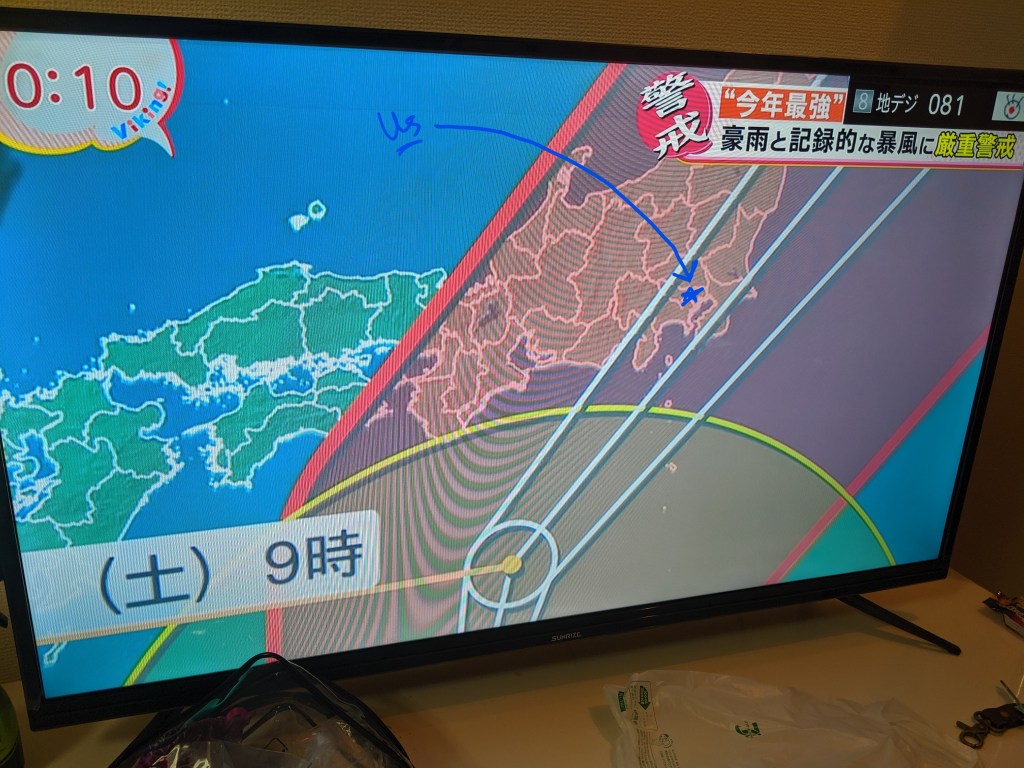
TV stopped working before noon. We were lucky that the electricity and water didn’t go out throughout the entire time. The wind was crazy! It whooshed and slammed our windows with such force that we really thought that the glass will break. We sat behind the bed, having it protect us. Just in case. The rain was also crazy. We peaked through the balcony one time and saw waves of rain above us and below us. And by “waves of rain” I mean sections of rain moving different ways… Let me try this again. It was as if the wind was taking sections of rain and just slamming them this way and that way, as if playing basketball.
I kept following the news online and seeing streets flooded, cars turned. Bridge collapsed. Thousands after thousands of houses without electricity. First fatality. Then second. Then more. I kept receiving the emergency alerts on my phone (always in Japanese) that kept announcing the emergency level 5.

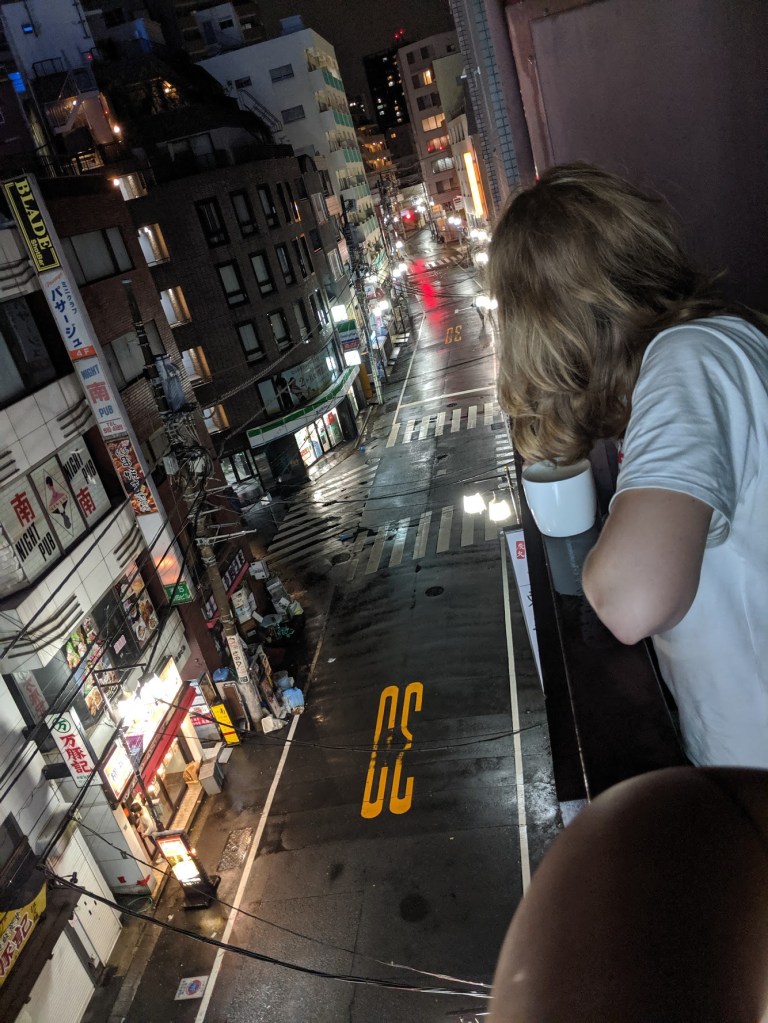
And in the midst of this whole craziness, when Vika didn’t let me come even close to the balcony fearing that the wind will take me away, some people were still walking the streets as if nothing was wrong. It was so absurd, we couldn’t help but laugh. While hiding behind one of the beds.
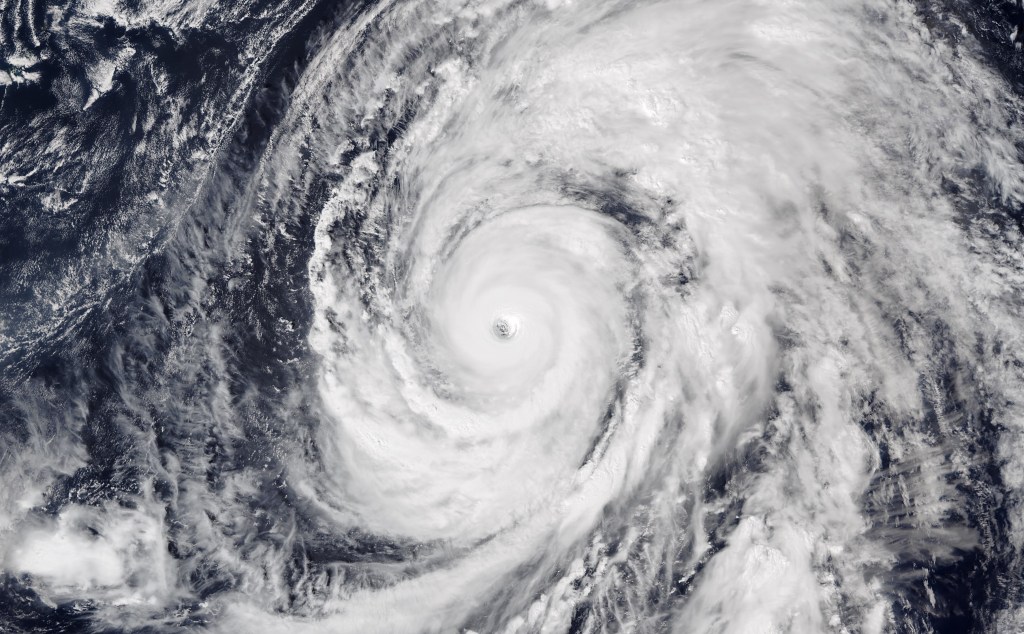
And then it stopped. The huge monster hovering above us that we saw on NHK typhoon update page was bored with us and has moved on to the next area of Tokyo. We were left with wet streets and a few misplaced buckets/lids/random stuff. The peace and calm that came suddenly were such a strong contrast to the typhoon that they seem a bit superficial. Me and sis were fine. She fell asleep soon after. I kept following the news for a couple more hours.
What did I take away from this experience?
- Japan is really good at handling disasters
- I am a total noob at disasters (well not any more)
- Some Japanese people… don’t care? I can’t actually find an explanation to why those people were still on the streets…
- Emergency food mysteriously disappears. Fast.
And a great bonus item – our hide-and-seek skills finally paid off. Who would have known? You can actually apply what you’ve learned at school. Well, pre-school.
 Chasing Phantom
Leave a comment